Smart Water Box Review (2026): I Checked The 40-Gallon DIY Blueprint—Here’s What Nobody Tells You About The Real Build Cost
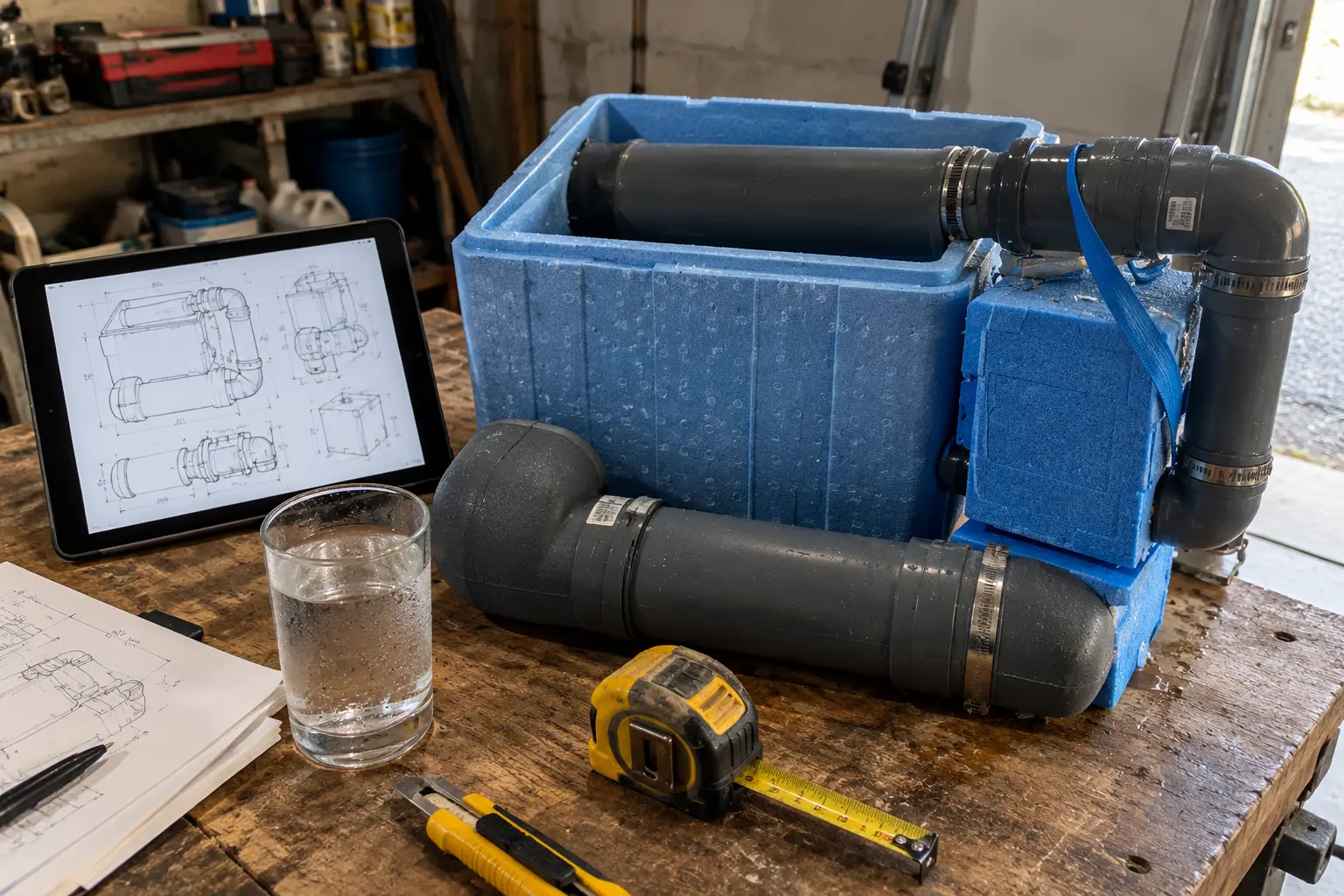
📌 TL;DR: The Physical Investigation Verdict
Is the Smart Water Box a scam? No, the physics of Atmospheric Water Generation (AWG) are completely real. However, the marketing is confusing. You are NOT buying a physical water machine. You are buying a $39 digital PDF blueprint and video course that teaches you how to build one yourself. If you have basic garage skills and live in a moderate-to-high humidity climate, this guide will save you thousands compared to buying a $2,000 commercial AWG unit. However, if you live in a dry desert (like Arizona) or do not want to visit a hardware store to buy parts, this is not for you.
Let’s get one thing straight before you spend a single dollar: Smart Water Box is NOT a physical machine delivered in a cardboard box to your front porch.
If you are expecting a plug-and-play appliance that instantly sucks water out of thin air to arrive in the mail, close this tab right now. You will be deeply disappointed.
But if you are a homesteader, prepper, or simply someone wanting off-grid water security, you are probably wondering if James Anderson’s DIY Atmospheric Water Generator (AWG) plans are mathematically sound—or just an expensive internet theory. I tore through every page of the digital guide, calculated the actual local hardware store costs, and analyzed the humidity physics so you don't have to.
1. The Format Reality: What Do You Actually Get?
Many affiliate blogs try to hide the fact that this is a digital product to secure a quick commission. We don't do that here. When you pay your $39, you receive instant access to a digital dashboard. Inside, you get:
- The Master Blueprint (PDF): Step-by-step written instructions with schematics showing how to assemble the condensation unit.
- Video Tutorials: Visual guides showing the actual assembly process, which is incredibly helpful if you are a visual learner.
- The Parts List: A shopping list of exactly what you need to buy at Home Depot, Lowe's, or Amazon.
The system works by pulling ambient air across chilled coils (similar to a dehumidifier or air conditioner), causing the moisture in the air to condense into liquid water, which is then collected and filtered.
2. The True Build Cost Calculator (No Fluff)
The sales page focuses on the cheap $39 entry price. But as an investigator, I need you to know your Total Project Cost before you start. Here is a realistic estimate of what you will spend at your local hardware store to actually build the unit.
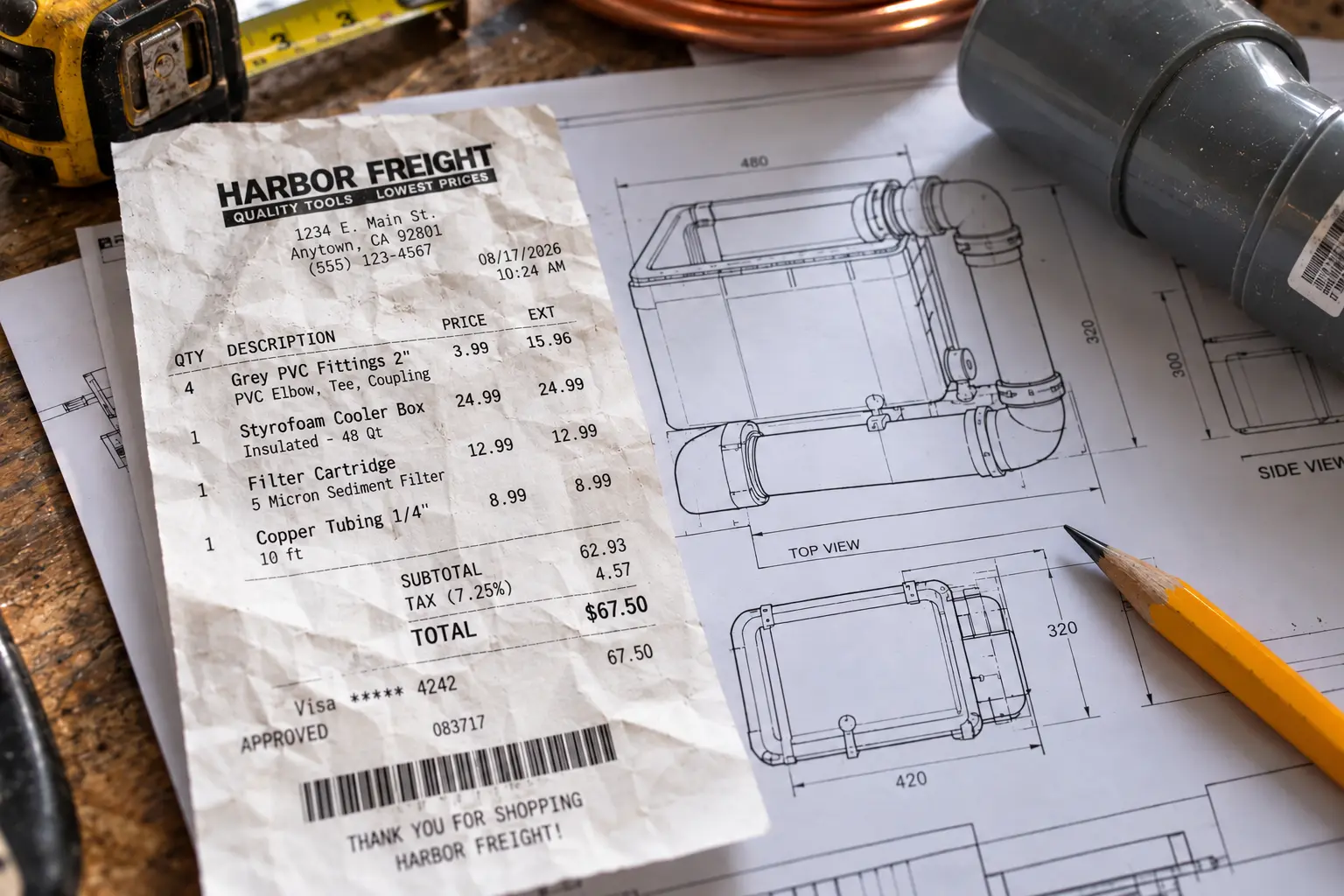
🛠️ The Realistic DIY Cost Breakdown
Prices will vary based on your location and what scrap materials you already have in your garage. This is an estimated median cost:
| Component Required | Purpose in Build | Estimated Cost |
|---|---|---|
| The Digital Blueprints | The actual Smart Water Box instructional guide. | $39.00 |
| Core Condensation Unit | The mechanical parts/coils used to rapidly cool the air and force condensation. | ~$60 - $90 |
| Food-Grade Collection Bin & PVC | Housing the system and safely storing the collected water. | ~$30 - $45 |
| Filtration & Mineralization | Purifying the extracted water for human consumption (Crucial). | ~$35 - $50 |
Estimated Total Build Cost: ~$164 to $224. Compared to buying a $2,500 pre-built commercial AWG unit, this DIY route is incredibly cost-effective—if you are willing to put in a Saturday afternoon of labor.
Blueprint Investigation Complete. Secure the Official Guide Below:
Get The Official Blueprints Here >>3. ⚠️ The Humidity Trap: Will It Work In Your State?
The sales material advertises the potential to produce "up to 40 gallons a day." This is the maximum theoretical output under ideal conditions. We need to talk about the physics of relative humidity.
You cannot pull water from air that contains no water. If you live in Florida, Louisiana, or Hawaii (where humidity regularly sits at 70% to 90%), this system will pull gallons of water rapidly. The air is thick with moisture.
The Arid Climate Warning
If you live in a dry desert environment like Nevada, Arizona, or parts of Utah where humidity drops below 30%, this build will struggle. The machine will use electricity to cool the coils, but it will yield very little water because the ambient air is bone dry. Do not build this system if you live in a permanent desert.
4. 🚨 Critical Warning: Water Safety & Filtration
One of the biggest mistakes DIYers make with atmospheric water generation is drinking the water straight from the condensation coils. You must not do this.
When water condenses from the air, it is essentially distilled water. However, the air carries dust, airborne bacteria, and mold spores. When that moisture hits the coils, it washes those contaminants into your collection bin. Furthermore, distilled water lacks essential dietary minerals (like calcium and magnesium).
The Smart Water Box guide covers this, but we want to reiterate it: You must route the collected water through a basic carbon/micron filtration system (like a Berkey or standard inline filter) before drinking it. Treat it exactly as you would treat collected rainwater.
5. Financial Verdict: Is It Worth The Effort?
If you lack basic tool skills, hate going to the hardware store, or expect a magic box to arrive in the mail, do not buy this.
🛡️ Our Purchasing Recommendation
However, if you are serious about off-grid independence and want a backup water supply without spending $3,000 on a commercial unit, the Smart Water Box blueprints are an exceptional value.
For a one-time fee of $39, you get the exact schematics and parts list to build a highly efficient condensation unit. It is protected by a 60-day money-back guarantee (processed through ClickBank), meaning you have two full months to download the plans, review the parts list, and decide if you actually want to build it. If the build looks too complex for you, simply email them for a full refund of the $39.
Download The Blueprints (Official Site) >>6. My Honest Final Verdict & Pros/Cons
As a consumer investigator who actively tests survival gear and off-grid blueprints, I often see digital products overpromise and underdeliver. The Smart Water Box is a unique case. The science behind atmospheric water generation (AWG) is 100% legitimate—commercial units have used this exact condensation technology for decades. What this blueprint effectively does is democratize that technology, allowing you to bypass the $3,000 retail markup by sourcing your own mechanical parts.
However, my honest verdict comes with a major caveat regarding marketing transparency. The promotional videos make it sound almost magical, glossing over the physical labor and the strict humidity requirements. If you live in an arid desert climate, you will be deeply disappointed with the daily water yield. But if you reside in a moderate-to-high humidity environment and possess a weekend warrior's attitude towards DIY projects, these plans are fundamentally sound, mathematically accurate, and well-illustrated. Here is my final breakdown of the pros and cons:
The Core Advantages
- Massive Cost Savings: Builds a functioning AWG for roughly $150–$250 in local hardware store parts instead of paying thousands for a pre-built commercial unit.
- Step-by-Step Clarity: The inclusion of both written PDF schematics and video tutorials caters to all learning styles, making assembly manageable for average DIYers.
- Off-Grid Independence: Provides a genuine, renewable backup water source that can be easily paired with a standard solar generator for complete grid detachment.
The Drawbacks to Consider
- The Humidity Dependency: The system's output drops drastically in low-humidity environments (under 35%), making it virtually useless for deep desert living.
- Required Filtration Labor: You cannot safely drink the water straight from the condensation coil. You must independently set up and maintain a carbon/micron filtration system to remove airborne contaminants.